The Art of Room Anchoring: How to Ground Your Space with Designer Intent
Disclaimer: This post contains affiliate links. If you make a purchase through these links, I may earn a small commission at no additional cost to you. I only recommend heritage pieces I genuinely love.
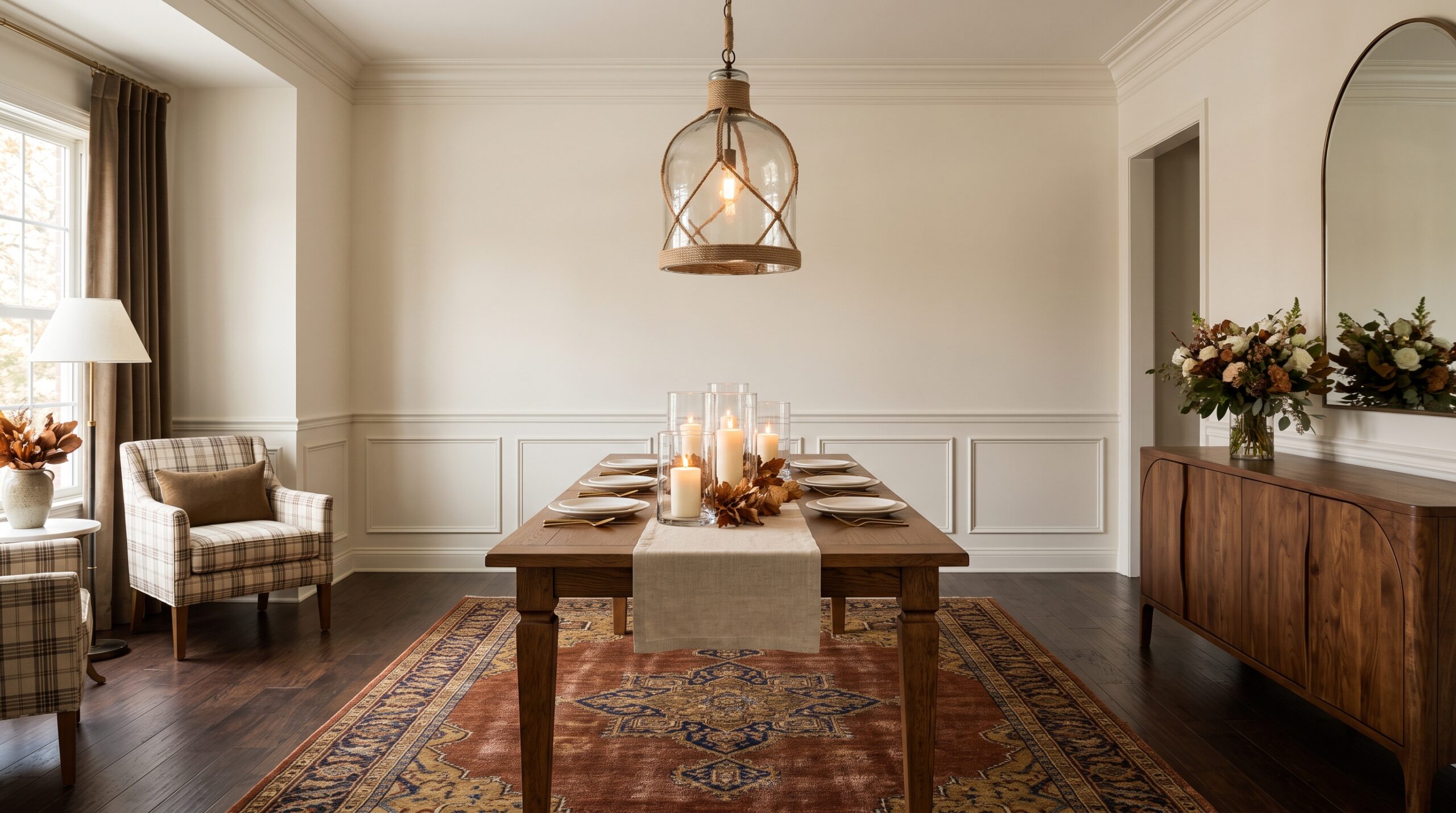
Every unforgettable room has a starting point—a single, commanding element that sets the tone, dictates the scale, and serves as the visual anchor for the entire space. While layering builds texture and atmosphere over time, anchoring is the foundational catalyst. It establishes where the eye lands first and gives every subsequent furniture and lighting choice a sense of purpose.
Whether you are designing a high-traffic living room or preparing a formal dining space for fall entertaining, here is how to use key furniture and lighting anchors to ground your home.
1. The Architectural Anchor: Statement Dining Tables
In open-concept homes or expansive dining rooms, floating furniture without a clear center can leave a space feeling ungrounded. A substantial dining table acts as an immediate anchor, defining the room’s central axis.
The Anchor Piece: Theodore Alexander Nova Extendable Solid Oak Dining Table
Why It Works: With its solid oak construction, rich graining, and structured tapered legs, a high-caliber wood table grounds the floor plane. The substantial silhouette creates visual weight, allowing you to build upward with lighter elements like crisp fabric drum pendants or delicate stemware.
Styling Tip: Allow 36 to 42 inches of clearance around your central table anchor to preserve traffic flow while maintaining visual balance.
2. The Perimeter Anchor: Solid-Wood Buffets & Sideboards
While dining tables anchor the center of a room, walls require their own horizontal anchors to prevent large vertical surfaces from feeling cold or empty.
The Anchor Piece: Dovetail Furniture Marcellina Sideboard in Whitewash or Four Hands Lunas Sideboard
Why It Works: A low, long credenza grounds the perimeter of a room. The substantial solid-wood countertop of the Marcellina provides a heavy, tactile base, while closed cabinetry conceals clutter. It creates a defined horizontal plane that allows you to stage secondary focal points—such as oversized artwork or tall glass hurricanes—at eye level.
Styling Tip: Anchor your sideboard top using the “rule of thirds”—pair a tall central mirror or artwork with asymmetrical lighting (like a single large lamp or a pair of tall hurricane candles) to bridge the gap between furniture and ceiling.
3. The Vertical Light Anchor: Oversized Lanterns & Pendants
Anchoring isn’t limited to floor furniture. High ceilings and cavernous rooms often suffer from a disconnect between the seating plane and the upper third of the room. Overhead lighting acts as an aerial anchor, pulling the ceiling downward into a cozy scale.
The Anchor Piece: Regina Andrew Demijohn Large Glass Pendant
Why It Works: Hanging an oversized vessel pendant above a kitchen island or breakfast nook anchors the vertical volume of the room. The clear, hand-blown glass and natural rope detail define the functional zone below without blocking horizontal sightlines across open-concept layouts.
Styling Tip: Suspend large island or table pendants 30 to 36 inches above the tabletop to lock in the focal point without obstructing conversation.
4. The Focal Corner Anchor: Structured Accent Seating
Unused room corners often feel like afterthoughts. Placing a lightweight, flimsy chair in a corner only highlights the awkward space. A structured, deep-seated armchair anchors empty nooks, turning forgotten corners into intentional destinations.
The Anchor Piece: Serena & Lily Caledonia Armchair
Why It Works: With solid hardwood framing and sweeping track arms, a tailored armchair creates an instant reading nook or conversational corner. It grounds the corner visually, giving you a base to layer tactile throws, a small side table, and a warm wall sconce.
Bringing It All Together
When designing a room, start by identifying your anchor piece first. Once your primary anchor is in place—whether it’s a solid oak dining table, a heavy whitewashed sideboard, or a statement pendant—every accent lamp, rug, and decorative vessel will naturally fall into place around it.