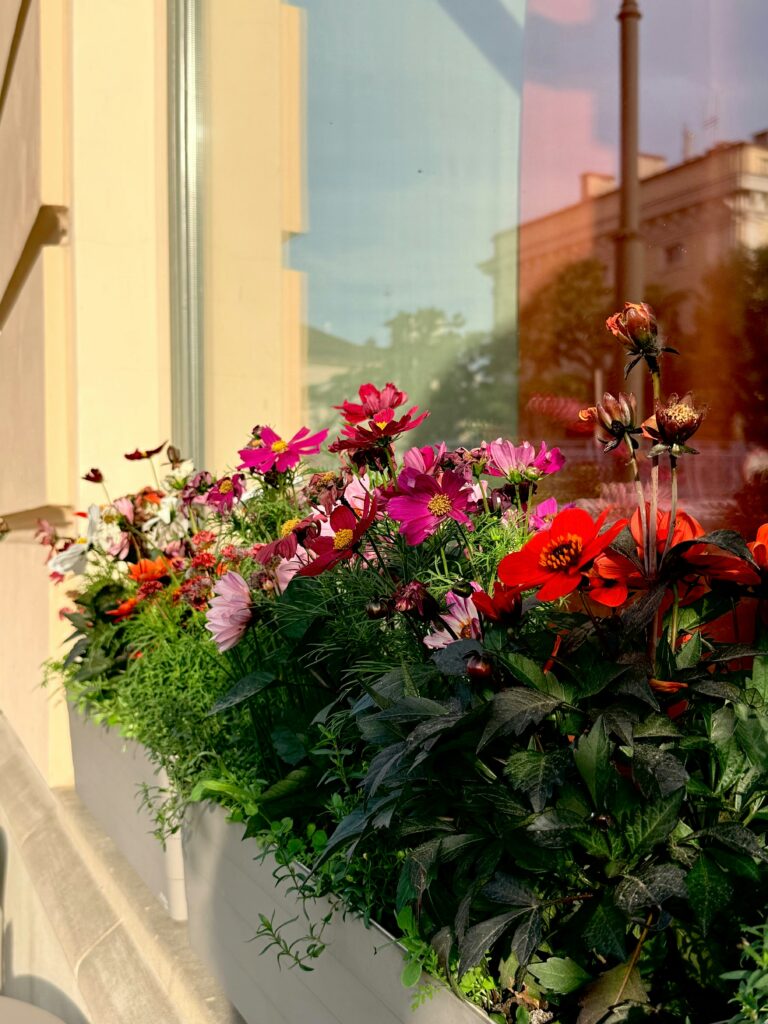
When we think about boosting a home’s curb appeal, we often focus on the grand gestures: painting the front door, manicuring the lawn, or pressure-washing the driveway. But true architectural charm is often found in the smaller, intentional details. In the world of historic home exterior design, there is no detail quite as romantic or transformative as a beautifully curated window box.
I call window boxes “architectural jewelry.” Much like a perfect piece of heirloom jewelry sets off an outfit, a window box softens the hard angles of a house, connects the structure to the surrounding landscape, and introduces a layer of living texture.
Having moved into my 1941 cottage just six months ago, I have spent hours studying its front facade—a traditional white 1.5-story frame anchored by a massive oak tree and flanked by genuine black wood shutters. As I look toward enhancing its face for the upcoming seasons, adding window boxes to the three front windows is at the very top of my list. Here is the blueprint for creating a classic, high-end window box display that honors traditional style.
1. The Structure: Choosing the Right Architectural Material
The biggest mistake people make with window boxes is buying cheap, flimsy plastic inserts that sag under the weight of wet soil and sun exposure. To achieve a luxury look, the container must look like an intentional, high-quality extension of the house itself.
Depending on your home’s architectural pedigree, there are a few investment-grade materials that elevate a facade instantly:
- Classic Painted Wood: For my 1941 home, this is the blueprint. To create a unified look, paint your wooden window boxes to match your home’s shutters rather than the siding. By painting our future boxes the same deep, crisp black as our working wood shutters, it will anchor the windows and create a sophisticated, intentional rhythm across the white siding.
- Heirloom Solid Copper: If you want your home to exude a timeless, European estate feel, solid copper window boxes are unmatched. Over time, the bright copper reacts with the elements, developing a spectacular, historic verdigris patina (that soft, oxidized blue-green) that looks incredibly beautiful against brick or stone.
- Wrought Iron & Hayracks: For a classic English country cottage aesthetic, heavy-duty black wrought iron cages paired with natural coco-fiber liners (or slipped over a metal liner) offer incredible structural romance. They bring a weight and historic gravity to a exterior wall that plastic simply cannot replicate.
- Self-Watering Composite: For high-sun areas where daily watering isn’t realistic, high-end fiberglass or cellular PVC composite boxes mimic the crisp look of painted wood but feature hidden, internal water reservoirs that keep roots hydrated for days.
2. The Soil Foundation: The Secret to Luxury Growth
A window box is a demanding environment for plants. Because they sit above ground and are exposed to wind and sun from all sides, they dry out rapidly.
To set your display up for success, never use standard backyard dirt, which packs down like brick. A premium window box requires a lightweight, nutrient-rich potting mix blended with perlite for aeration and moisture-retaining crystals or organic compost. This ensures the roots can breathe and stay hydrated, giving you that lush, overflowing “estate garden” look rather than a sparse, struggling display.
3. The Planting Formula: Thriller, Filler, and Spiller
To design a window box that looks like it was styled by a professional botanist, you must use the classic design triad: a thriller (height), a filler (mound), and a spiller (trailing texture).
For a classic white cottage, you cannot beat a traditional, high-contrast palette. My blueprint for the front windows features a time-tested combination:
- The Thriller & Filler: Classic Red Geraniums. Geraniums are the royalty of the cottage garden. Their rich, velvety red blooms offer a striking, graphic punch against white siding, while their scalloped, deep-green foliage fills the center of the box with weight and structure.
- The Spiller: Creeping Jenny (Lysimachia nummularia). To soften the crisp edge of the black wooden boxes, Creeping Jenny is unmatched. Its brilliant, chartreuse-yellow leaves will cascade over the front edge like liquid sunshine, creating a stunning contrast against both the black wood and the red geraniums.
A Canvas in Progress
Restoring a historic home is a marathon, not a sprint. It’s about listening to the house, understanding its lines, and adding elements that will age gracefully alongside it. As the seasons shift, these three black wooden boxes will become a living extension of our 1941 cottage—a bit of architectural jewelry that welcomes neighbors, celebrates the history of our street, and brings the garden right up to our glass panes.